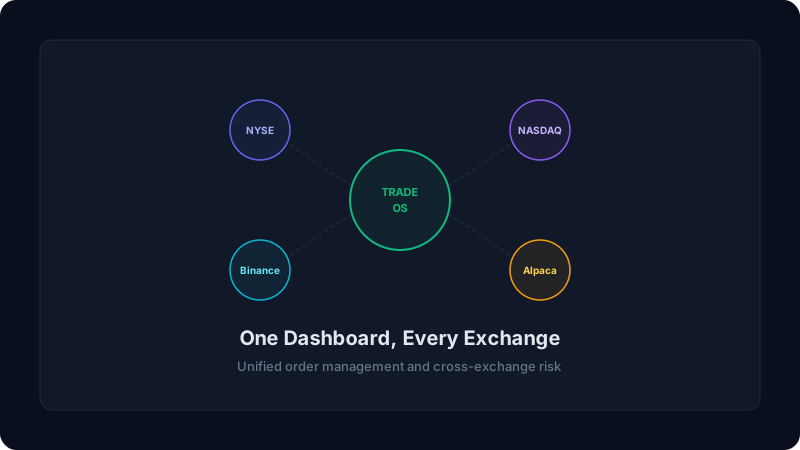
If you trade across more than one exchange or broker, you already know the pain: different interfaces, separate P&L tracking, disconnected risk views, and the constant tab-switching that slows you down at the worst possible moments.
The Fragmentation Problem
Markets are more fragmented than ever. Equities trade across dozens of venues. Crypto liquidity is spread across hundreds of exchanges. Options flow through multiple clearing houses. For a trader working across asset classes, this means managing positions in three, four, or five separate systems.
The real cost isn't just inconvenience—it's invisible risk. When your positions live in separate silos, you can't see your true net exposure. A hedge on one exchange might not offset the position it's meant to protect on another, and you won't know until it's too late.
What Unified Trading Looks Like
- ▸Consolidated Portfolio View — Every position across every connected account in one dashboard. Real-time P&L, exposure by sector, asset class, and geography.
- ▸Smart Order Routing — Submit an order once and let the system find the best execution across connected venues based on price, liquidity, and fees.
- ▸Cross-Exchange Risk — Correlation analysis and drawdown limits that account for your full portfolio, not just what's on one exchange.
- ▸Unified Reporting — One tax report, one performance summary, one audit trail. No more reconciling spreadsheets at year-end.
The Arbitrage Opportunity
Price discrepancies between exchanges are more common than most traders realize, especially in crypto and during periods of high volatility. A unified platform that monitors multiple order books simultaneously can detect and act on these discrepancies faster than switching between tabs ever could.
How Trade OS Approaches This
We're building Trade OS with multi-exchange as a first-class concept, not an afterthought. Every feature—from the portfolio dashboard to the strategy engine to the risk controls—is designed to work across multiple connected accounts from day one.
This article is for educational purposes only and does not constitute investment advice.